-
A-A+
- Українською
- Português
- Українською
- Português
English
English
Day of Remembrance of the Victims of the Crimean Tatar Genocide
17 May 2025 16:02
On 18 May, Ukraine commemorates the Day of Remembrance of the Victims of the Crimean Tatar Genocide — one of the most tragic chapters in modern history. On this day in 1944, the Stalinist regime launched the mass deportation of the Crimean Tatars from their historical homeland — Crimea.
This crime, by its nature and consequences of WWII, meets the international definition of genocide and was an attempt to destroy the Crimean Tatar community as an Indigenous people, to erase their presence from the peninsula, and to eradicate their culture, language, and traditions.
The deportation was a culmination of a Russian colonial policy aimed at de-Tatarization of Crimea. The decree of the State Defense Committee of May 11, 1944, signed by Stalin personally, completed the process of forced displacement of the indigenous people from their land, which began in 1783.
While the Crimean Tatar men were at the front, the Soviet authorities sent children, women, and the elderly into exile, a way that for many became their last. On the way, in cramped boxcars, without food, water, or medical care, 7000–7900 Crimean Tatars died of starvation and disease.
The Soviet regime carried out the deportation using over 30 000 soldiers and NKVD (Russian abbreviation for People's Commissariat for Internal Affairs) operatives, hundreds of cars and trucks, and 67 trains.
As at 8 a.m. on May 18, 90,000 Crimean Tatars were boarded in 25 trains consisting of freight cars. 48,400 Crimean Tatars in 17 trains had already been deported to Uzbekistan. On May 19, 165,515 Crimean Tatars were deported in freight cars.
The murderous way of the deportees to the places of special settlements in freight cars lasted an average of 2–3 weeks. Upon arriving, deported representatives of the indigenous people were granted the status of “special settlers”, implying constant surveillance, registration in commandants’ offices, and forced physical labour. Their children could not attend school due to a lack of shoes and clothes.
According to the NKVD of the Uzbek Soviet Socialist Republic, 16,052 Crimean Tatars (10.6%) died of disease and inhumane conditions during the first six months of deportation, and 13,183 (9.8%) in 1945. In Uzbekistan alone, almost 30,000 Crimean Tatars died during the first year and a half of deportation. In some regions, the death rate among the deportees was over 60-70%. According to estimates by the National Movement of the Crimean Tatar People, the number of deaths in exile is much higher.
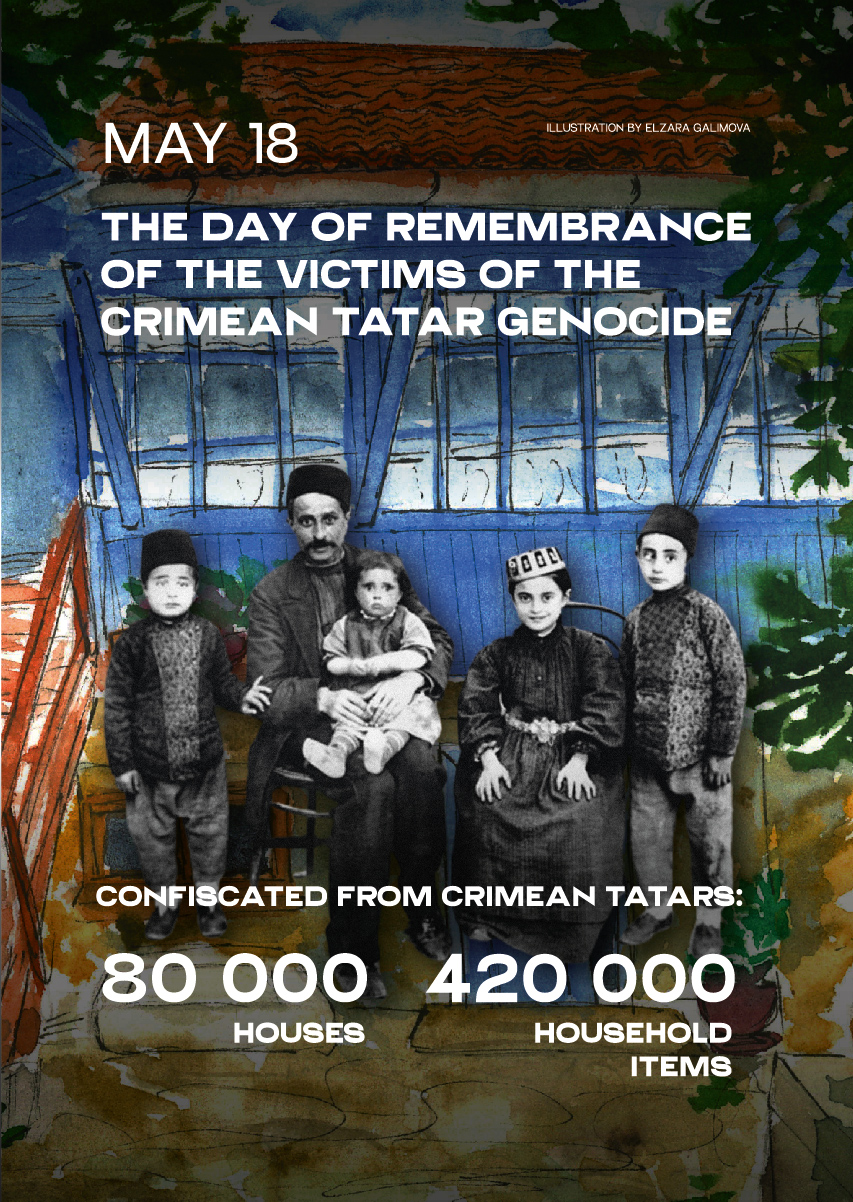
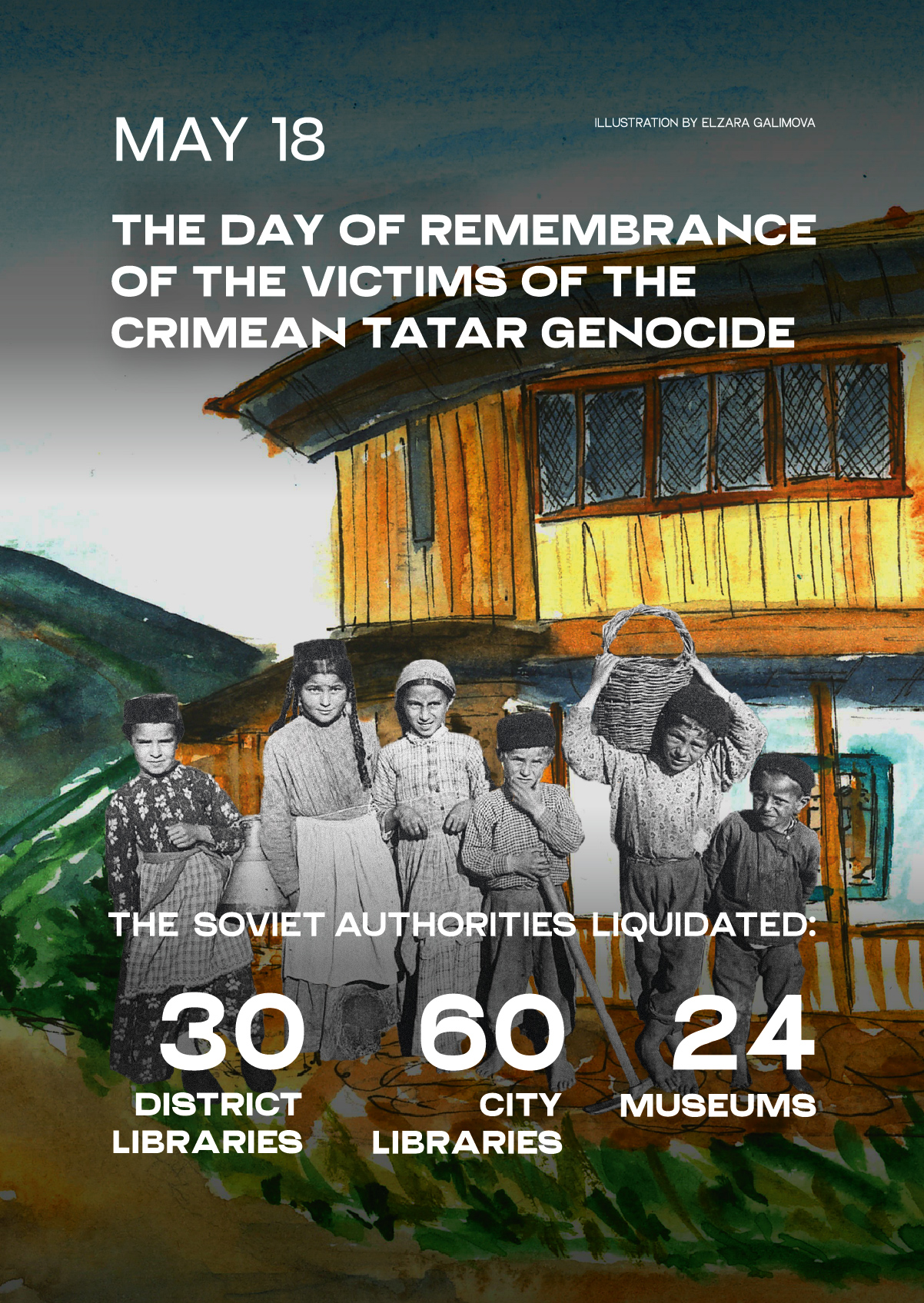
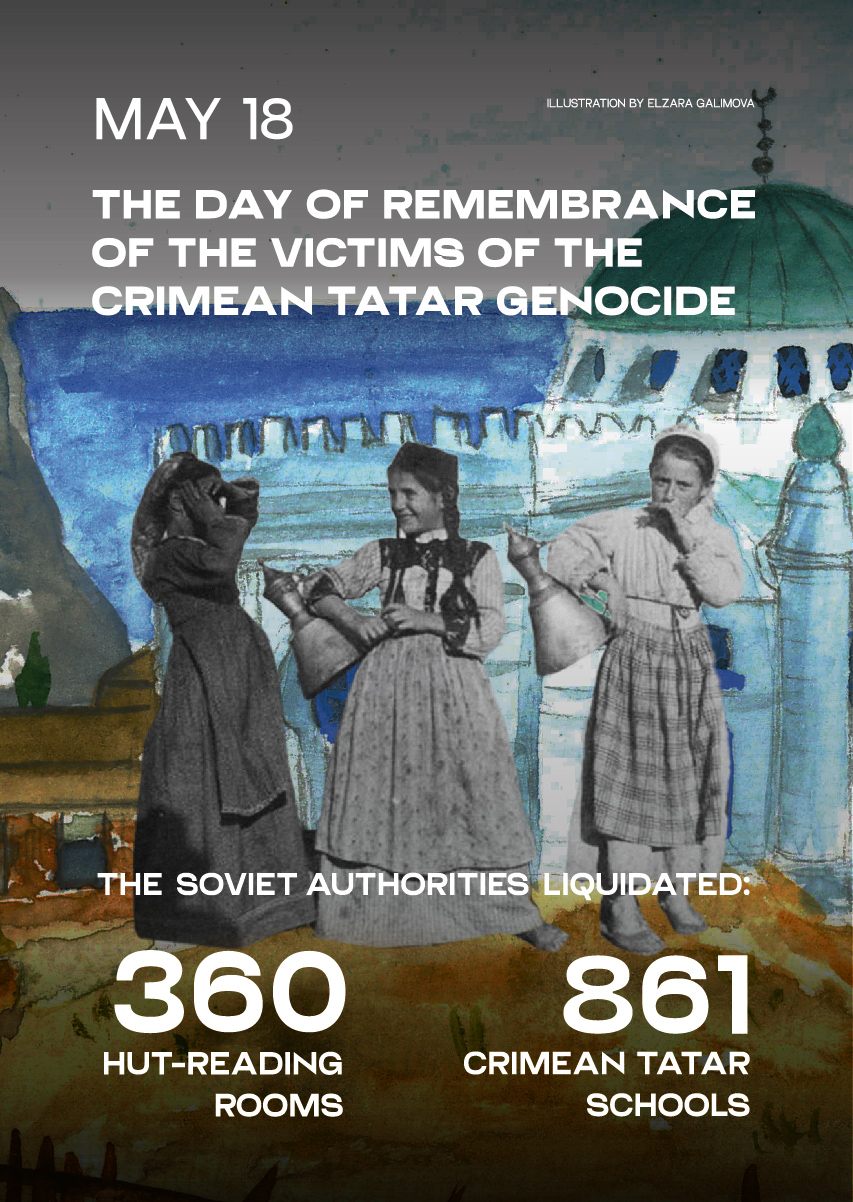
The genocide was aimed not only against the Crimean Tatar people, but also their material culture. After the deportation, the Soviet authorities liquidated hundreds of libraries, schools, museums, editorial offices, theaters, educational institutions, as well as book collections, unique manuscripts, orchestras, and artistic ensembles.
Despite the enormous losses, violence, and decades of exile, the Crimean Tatars never ceased their struggle for the right to live on their land.
The rise of the Crimean Tatar national movement began in the second half of the 1950s, followed with arrests and detentions of activists by the Soviet totalitarian regime. The Decree of 1956 abolished the regime of special settlements and released them from administrative supervision.
By the end of September 1967, about 2,000 Crimean Tatars had arrived in Crimea. However, almost none of them were registered, and without a residence permit, i.e. registration, Crimean Tatars could not buy a house or get a job.
In 1989, the mass return of Crimean Tatars to their historic homeland began. The Crimean Tatars who returned in the early 1990s started building their homes from scratch, living in dugouts and tents without water, electricity, or heat.
Today, the Russian occupation of Crimea largely mirrors the repressive policies of the Soviet era, targeting the Crimean Tatar people.
Only the de-occupation of Crimea and the restoration of Ukraine’s control over the peninsula will help restore justice, rights, and freedoms to people, including the Crimean Tatar people.
https://ppu.gov.ua/materialy-do-dnia-pam-iati-zhertv-henotsydu-krymskotatarskoho-narodu/
.jpg)