-
A-A+
- Українською
- Português
- Українською
- Português
English
English
Day of Resistance to the Occupation of the Autonomous Republic of Crimea and the City of Sevastopol
26 February 2026 12:00
The Russian Federation's aggression against Ukraine began on 20 February 2014 with the armed invasion and subsequent occupation of the Autonomous Republic of Crimea and the city of Sevastopol.
February 26 is the Day of Resistance to the Occupation of Crimea and Sevastopol in Ukraine. On this day in 2014, thousands of Crimean residents gathered outside the Crimean parliament to support Ukraine’s territorial integrity and oppose Russian aggression. Within days, Russia launched the active phase of its invasion of Crimea, followed by persecution of activists, journalists, human rights defenders, and anyone who openly opposed it.
International norms are unequivocal: the occupation of Crimea is illegal. The United Nations General Assembly, the Organisation for Security and Cooperation in Europe, the Council of Europe, the European Union and other international institutions do not recognise the attempted occupation of Crimea. Each year, resolutions and declarations have been adopted that clearly state that the Crimean Peninsula is an integral part of the sovereign territory of Ukraine and condemn its temporary occupation by Russia.
Occupied Crimea has become a territory of systematic human rights violations. Cases of torture, enforced disappearances, political persecution, repression against journalists and activists, as well as discrimination against ethnic Ukrainians and Crimean Tatars have been documented. Russia is pursuing a policy of Russification, including the banning of the Mejlis of the Crimean Tatar People, the marginalisation of the Crimean Tatar language and culture, and other practices that constitute systemic discrimination.
More information is available at the page of the Mission of the President of Ukraine in the Autonomous Republic of Crimea at https://ppu.gov.ua/en/documents/
The position of the President of Ukraine is clear and unwavering: Ukraine will not recognise Crimea as part of Russia, either de facto or de jure. The restoration of respect for international law and territorial integrity is an indispensable condition for a just and lasting peace."
"When we say that the aggressor must not receive any reward for the war, so that peace can truly last, everyone must understand – these are not just words. Unfortunately, the world already had the chance to verify this twelve years ago. Russia’s war against Ukraine began with the occupation of our Crimea, and the world effectively turned a blind eye to this. The leaders back then showed little interest in the protests and resistance in Crimea and in Ukraine’s overall sentiment. The world advised Ukraine to stay silent. That is exactly why Putin came to believe he could wage a much larger war and confront the West even more aggressively.
Now, every year on February 26 – the Day of Resistance to the Occupation of Crimea – we remember this global lesson, honouring those who did not stay silent and did not falter in the face of Russian aggression, and we insist that holding the aggressor accountable for war is one of the strongest security guarantees – one of the strongest prerequisites for lasting peace.
I thank everyone around the world who supports us in this, participates in the work of our Crimea Platform and other international formats that remind the world about Crimea and the meaning of its occupation by Russia. I thank everyone who helps Ukraine resist Russian repression in Crimea, assists us in returning people from captivity, and prevents the occupying regime from consolidating its power. Russian presence on our peninsula serves only war, and nothing else. There must be peace, and therefore Crimea is Ukraine, and the world must always recognize this fact. Qırım evine qaytmalıdır! Слава Україні!" https://www.facebook.com/share/v/1ZDLGxaJuf/
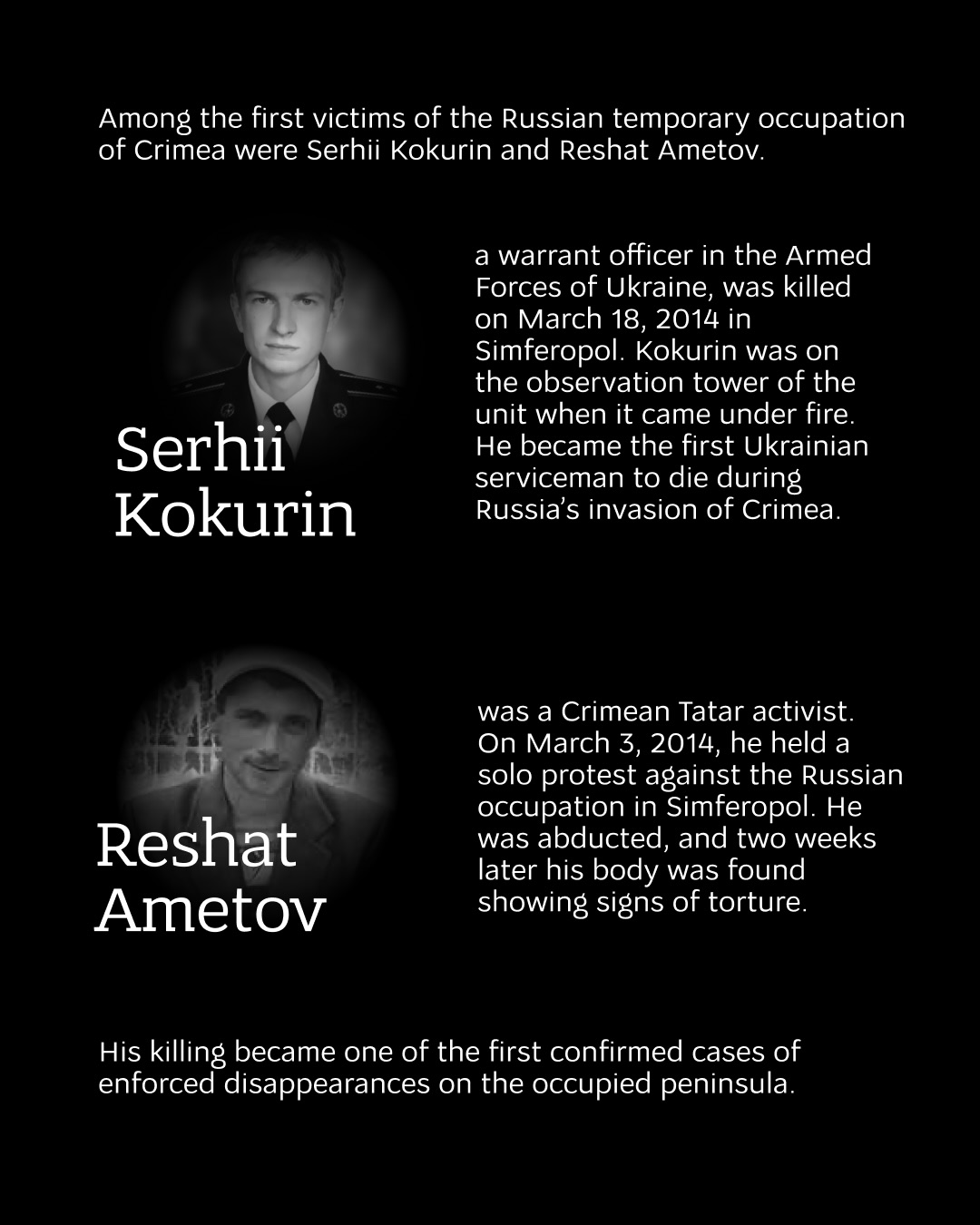
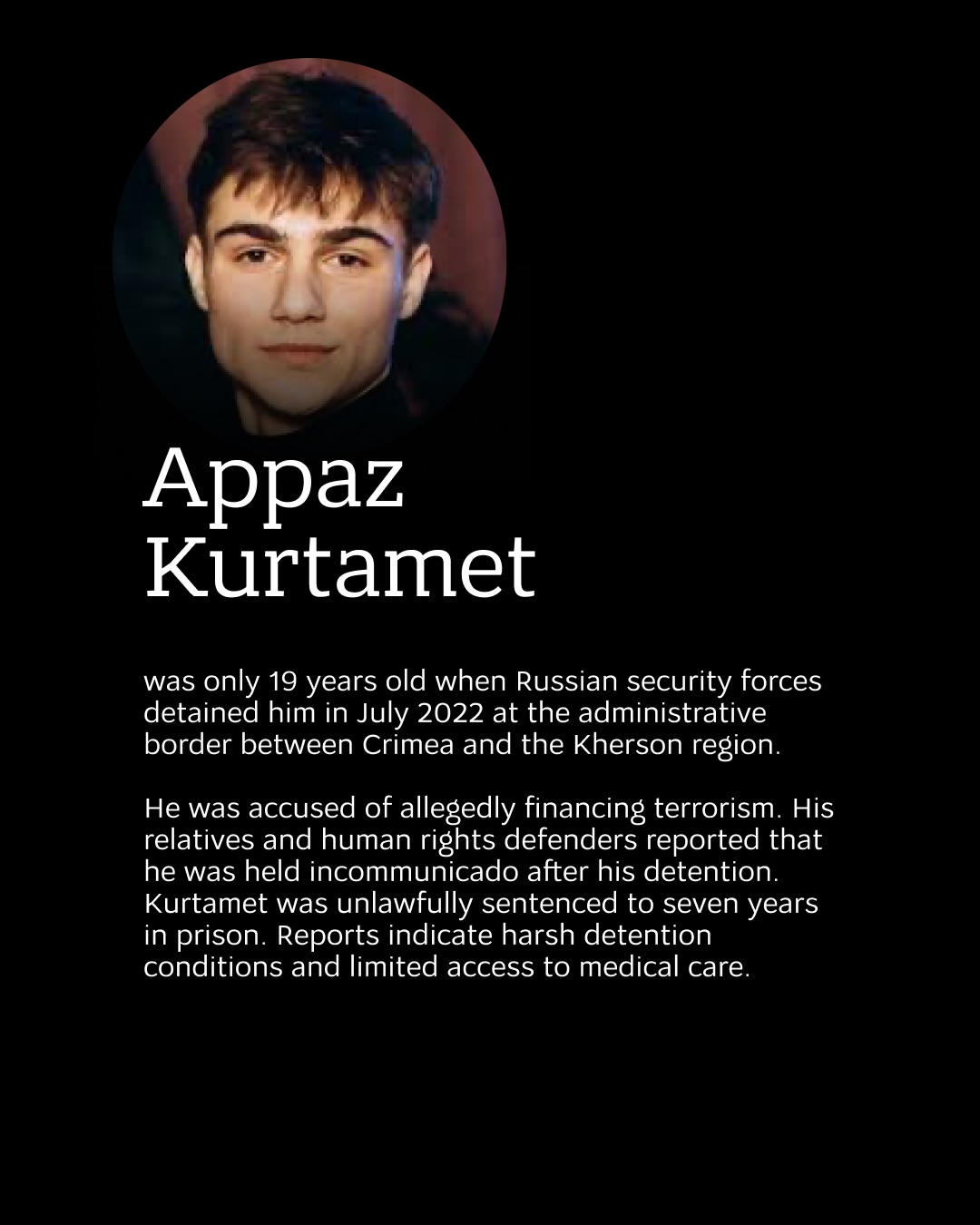
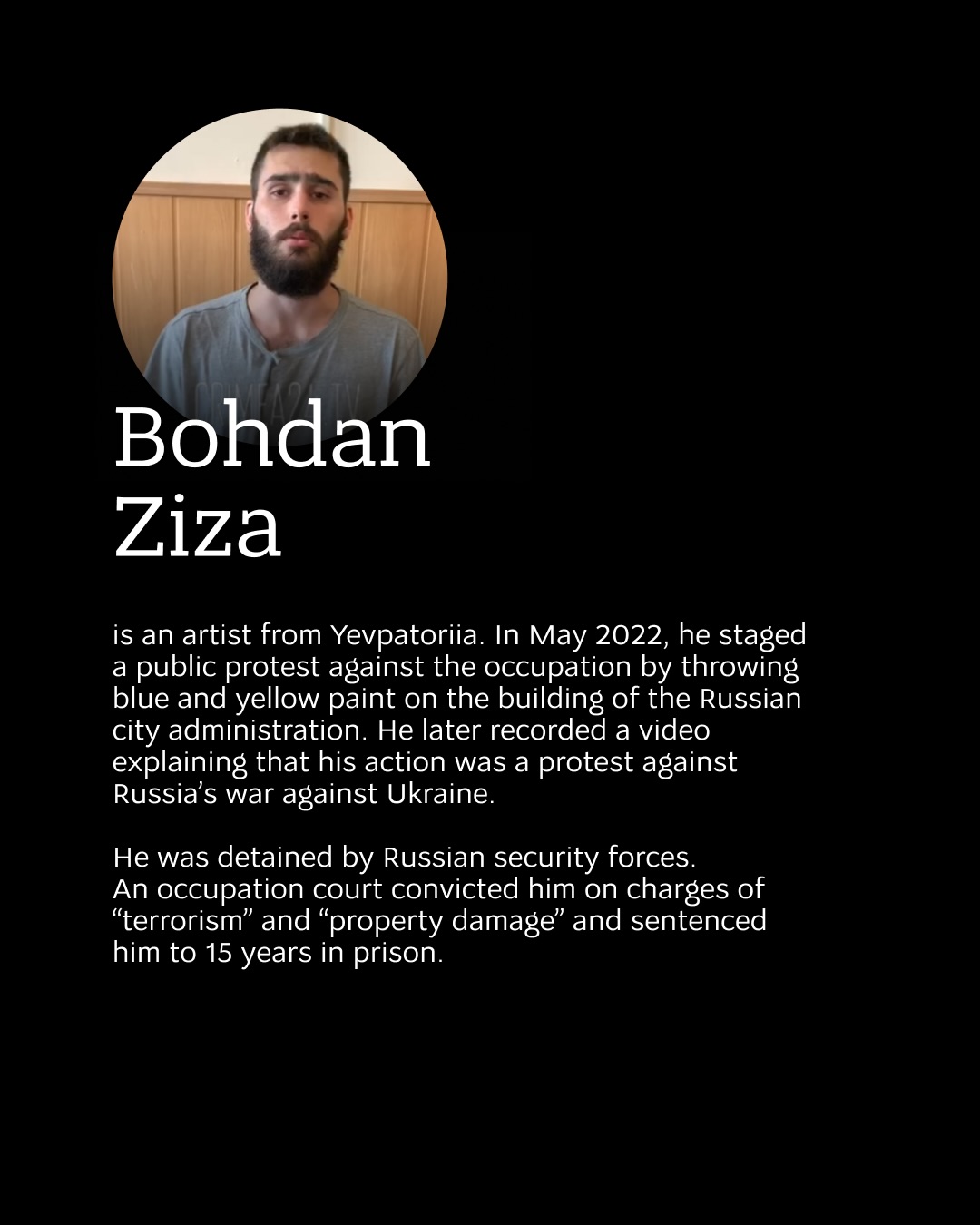
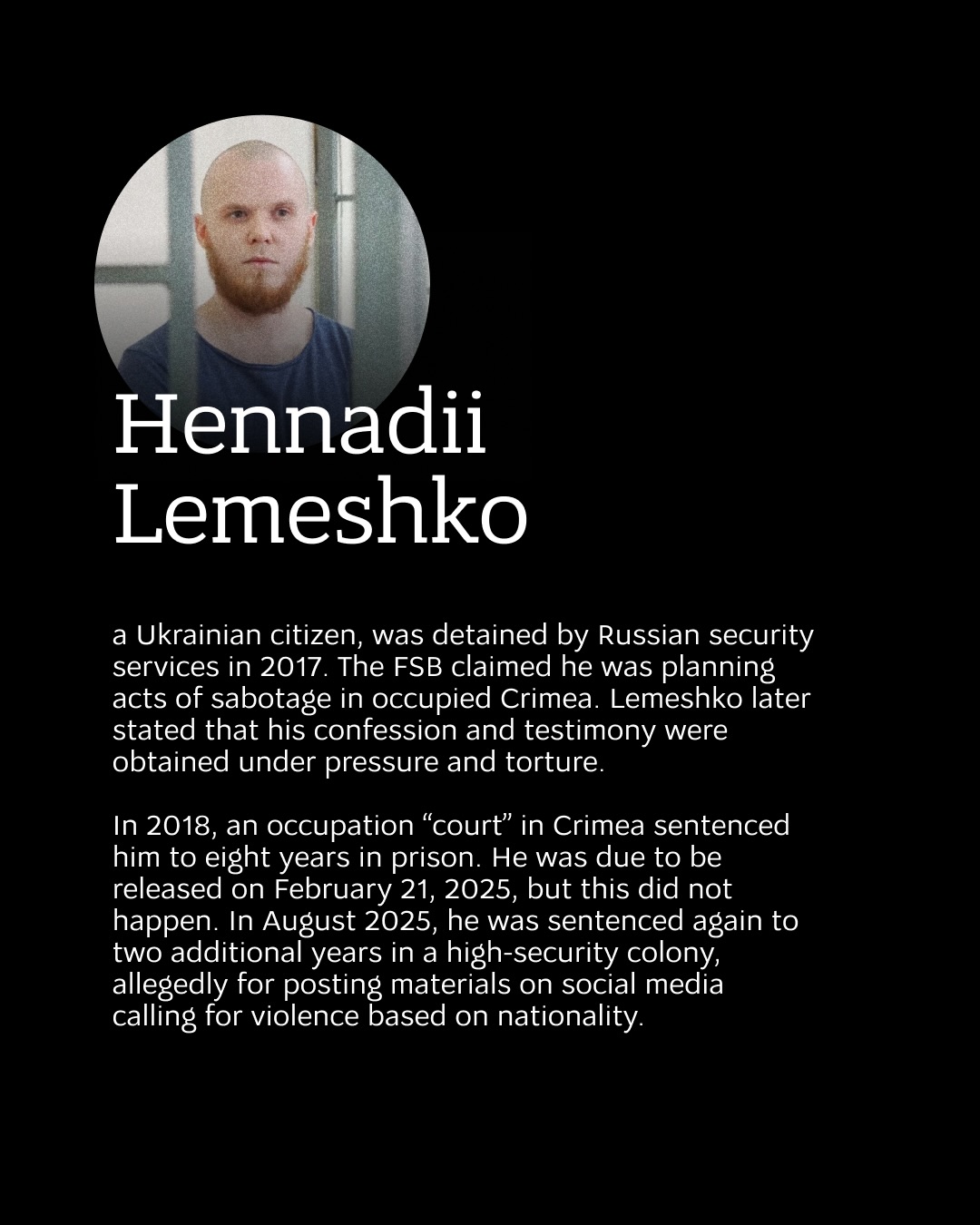
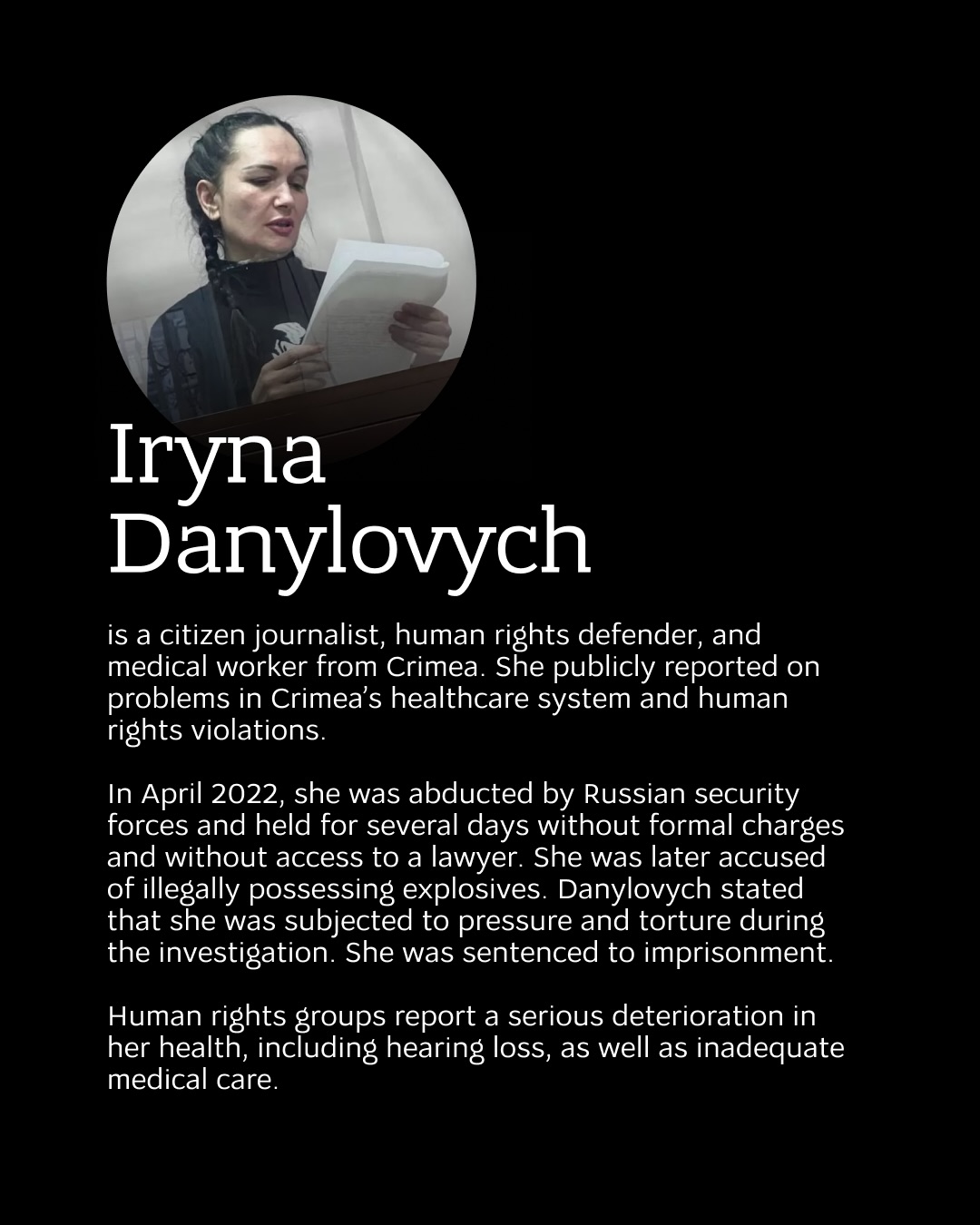
This day reminds us of those who stood up to Russian aggression in 2014 – and those who continue to resist today. Ukraine keeps working to free its citizens and document human rights violations in the temporarily occupied Crimea. The international community plays a key role through sanctions, monitoring, and support for political prisoners and their families. Today, we share the stories of Crimean political prisoners.
.jpg)